“Nature is not more complex than we think, but more complex than we can think.”
Frank Egler
It was a cold and nasty January morning, with freezing, whipping winds that rattle the windows and piercing rain that goes straight to your skin all the way to your bones. Any normal human being would have stayed themselves indoors, but I, rather defiantly, decided it would be a good day to visit The Stone Barns Center for Food and Agriculture – a farm where chef Dan Barber was putting in practice his ideas about the future of food. Having read halfway through his book “The Third Plate” and having asked around people in the know who Dan Barber was (I’ve never heard of him until I picked up his book tucked away on a shelf in a bookstore in Princeton, New Jersey), I was very curious to visit the farm and see firsthand what it was all about.
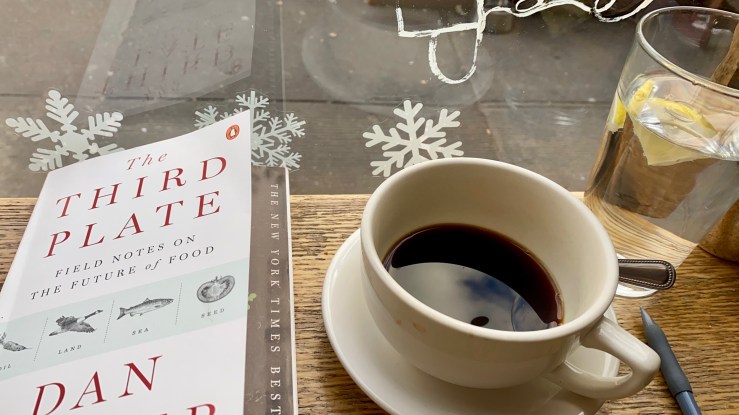
Barber seemed to be quite the celebrated chef and a big name in the farm-to-table movement but also someone that has taken the dialogue a little further by raising questions about ethical eating and regenerative agriculture. The other reason why I was itching to visit as soon as possible was a promise of the sweetest carrots ever, which the farm grows in the cold months of winter. So, with a carrot as bait and a love for the look of a barren land resting in the winter, I bundled up and took the train up to Tarrytown on a Saturday morning. My excitement must have been somewhat contagious and I was able to convince two of my friends to join me on a farm trip in a crappy weather in the middle of winter.
As we got in the taxi from the Tarrytown train station and headed towards the farm, I looked out the window into the hilly fields and felt a sense of warmth almost bordering with a sense of belonging that I haven’t felt until now in my adopted home New York. Though, it wasn’t my first time traveling around Upstate, it was certainly the first time I was seeing this land as something more than just a pretty landscape. Chatting half-heartedly with my friends, my mind began wandering through the rolling hills I was seeing from the taxi window and I wondered why I was so excited about this visit and why I couldn’t wait to go? And what was I really expecting to find in a farm in the middle of its winter beauty sleep when there wasn’t much to see or do?
We reached the farm a little before 11 am and quickly found our way into the store as the wind was picking up some serious speed. We were signed up for the daily hour-long tour of the farm, which was part of the educational programs the center was providing. I didn’t know what to expect but imagined it would be something similar to a winery tour minus the wine. There were a dozen other die-hard farm visitors browsing through the shelves with cookbooks, honey, wool hats, kitchenware, onions, beef and eggs. At 11 am sharp, a young lady from the educational center invited us outside and the tour began.
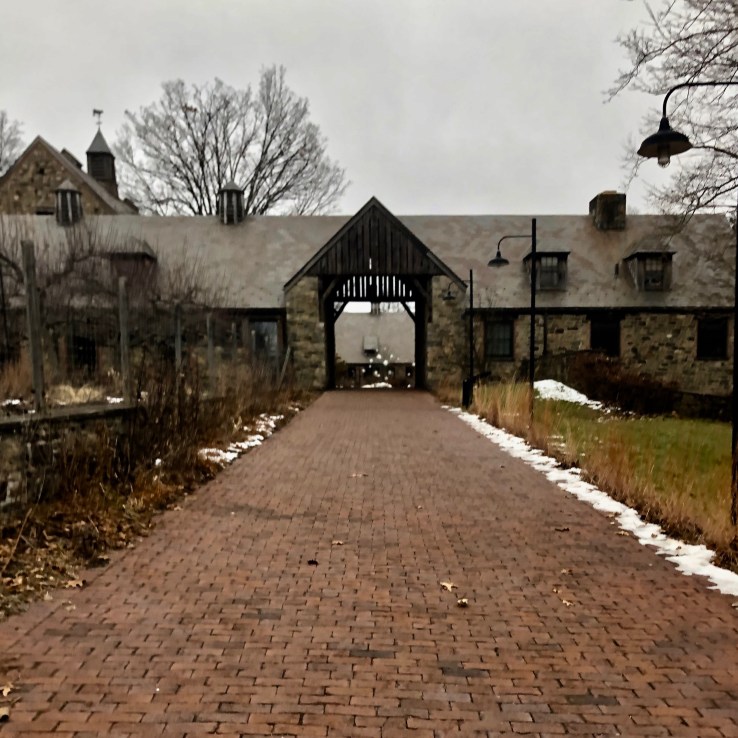
Stone Barns is a very literal name: all buildings on the farm were built from grey stone and on a rather large scale. We left the store but had to stay in a sheltered little corner in front of it, which made it hard to get a good look around and appreciate the real grandeur of the buildings around us. As our guide was going through her introduction of the history of the space, I realized that the Stone Barns farm and the adjacent educational center actually belong to the Rockefeller Family and the pretty hills that I was marveling at on our short ride there were the well known (to others, but not me) Pocantico Hills in the Westchester County. This was news to me, as in my head I had somehow migrated Dan Barber family’s Blue Hill Farm from Massachusetts to Upstate New York and was convinced that this was what we were visiting. My confusion wasn’t completely ungrounded, as there was a Blue Hill at Stone Barns, but it was the famous (and extremely pricey) restaurant of Dan Barber, that was named after his grandma’s farm. Once I had the facts and geography straightened up in my head, I accepted the reality of being in Westchester (not a bad reality by any stretch of the imagination) and moved on with the tour.
Naturally, there wasn’t much to see out in the open fields, so we dived into the row of greenhouses where most of the action was happening in this time of year. I couldn’t remember the last time I’ve been in a greenhouse, but the moment I walked in, it felt all too familiar, all too soothing. A greenhouse (if you haven’t been in one) is like a mixture between a sauna and a steam room for plants. The air is warm and moist, and the fragrance of the soil hits you right in the nose and shoots straight to your brain. Good, healthy, rich soil has a very distinguished smell: parts dirt, parts water, parts past life and tones of new life. I may be taking it a bit too far, but there is a specific sweetness to this smell that can be almost intoxicating. If you ever find yourself in a good greenhouse, scoop a bit of the soil with your hands, rub it between your palms and inhale. Have your mind open and let the smell sink in you. I promise you, it would be one of the most soothing things you’d have smelled.
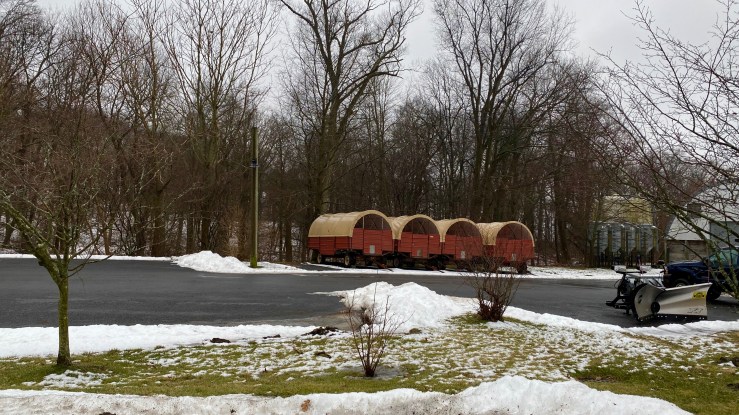
The first greenhouse was rather small and had a few trays of seedlings getting ready for the spring. At this point, all of us were in a line squeezing by a muddy patch on our way into the next greenhouse. We entered a much bigger space with distinctive bare metal structures and a white, thin blanket covering the ground. Our guide told us to peek under it and there they were: rows of spinach, kale, and a big leafy vegetable with dark green and purple leaves that was introduced to us as the star of the season. There was a collective gasp from all of us as we lifted the blanket and the pretty sight of healthy, good-looking vegetables unveiled in front of us. I’m personally always moved when I see abundance of nature; hence my love for late summer and early fall when trees are heavy with fruit, vines are ripe with grapes, the tomatoes are bursting with juice and the fields are abounding with grains. Having a sight of abundance if only in the shape of leafy greens in a time when the land is resting and the fields are barren, feels almost like magic. However, as pretty as those rows of lush dark greens were, I wasn’t quite satisfied. As the group was getting ready to head back out, I kept on lifting the white blanket trying to spot the rows of carrots, but alas, they were nowhere to be seen.


The last part of our farm tour was supposed to be a walk through the famous Blue Hill restaurant where a dinner for one starts at $300 and everything on the menu is sourced from the farm or foraged nearby. We were supposed to meet one of the sous-chefs who would tell us more about the connection the restaurant had to the farm and showcase some of the vegetables they were going to serve for dinner. I didn’t know what to expect, but I sure hoped that there would be some carrots as part of our mini tasting menu. After all, Dan Barber devotes a good 7-8 pages on the inherent sweetness of carrots and goes into minute details as to how the lead farmer of Stone Barns grows them in order to achieve the ultimate sweetness, while having them packed with nutrients. Reading those pages was like a revelation. There was someone out there in this world that appeared to care about carrots as much as I did.
Growing up, I used to eat carrots like a little rabbit – anywhere and anytime I could get my hands on them. The carrots I knew had sweetness to them, and juiciness that I found truly addictive. Carrots were like candy to me – whenever we had them in the fridge or in a box on the balcony of our two-bedroom apartment in Sofia, I would go and help myself until there were no carrots no more. I ate so many carrots that my brother used to joke that my skin would turn orange. Those carrots were usually sourced from my grandparents’ farm in the countryside or from the farmer’s market in our neighborhood (back then, people were calling it just “the Market” as “farmer” was sort of a dirty word in post-communist Bulgaria in the early 90s). I knew my carrots and I ate them only when they were very fresh, because I liked them crunchy, juicy and, you guessed it, sweet. When they were past that first couple of days, my mom would turn them into a delicious carrot soup and I would still eat them.
And then one day, I stopped eating carrots. It was a gradual process that led to that rather sad outcome. I left home and began living in places that were very far from the fields that were providing for my carrot addiction. At the time, I didn’t have the faintest clue that those carrots (and most of the other food I was used to) would not and as a matter of fact could not taste the same as it did back home. Not that there were no carrots. There were, but they were bitter, often tasteless and at times too hard to chew off. Back then, I didn’t really have a mind set that would make me ask the question why those carrots were tasting so different? My taste buds were simply registering the facts around me and the facts were that the carrots in Cairo (the place I lived at the time) simply weren’t up to par. I would still buy carrots in my quest to find a sweet carrot again, but they would all inevitably end up in a soup.
There was one other fact that I wasn’t aware of until many more years later. I always somehow assumed that all people knew what a truly sweet carrot taste like. When I discovered that folks couldn’t really tell the difference between a good carrot and a mediocre carrot, I, for some reason, attributed that to their lack of taste. It never crossed my mind that they never had the chance (like I did) to grow up eating sweet carrots and develop a taste for them. Most people simply didn’t know any better. So, finding my carrot soul mate in the most unexpected way and the most unassuming of places was truly exciting. I literally couldn’t believe my eyes reading that many pages filled with admiration for a carrot. Having almost lost all hope for the humanity’s ability to appreciate carrots, I had to go taste them myself to truly believe.
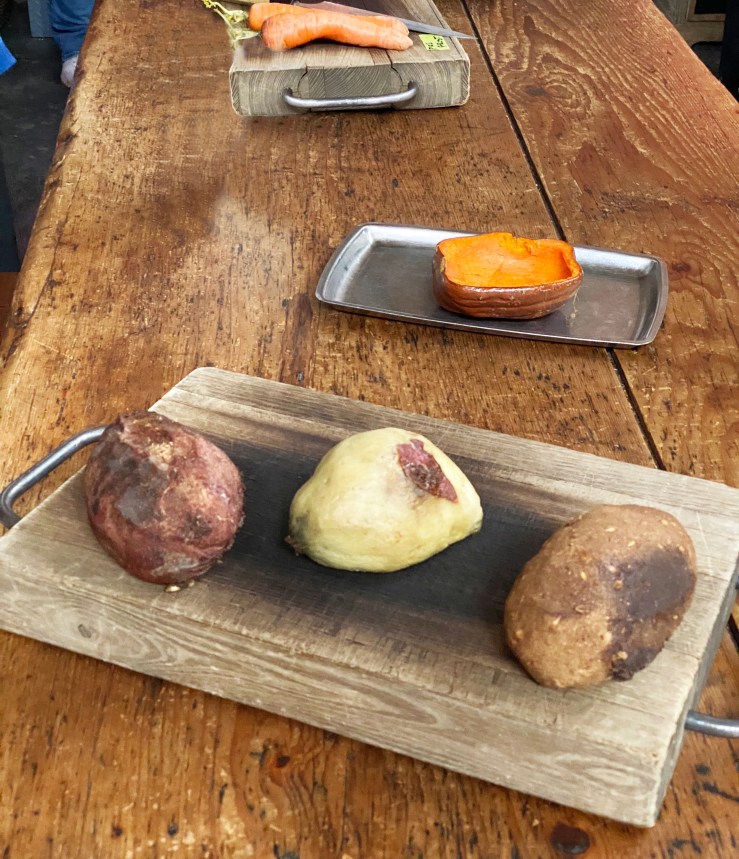
Back on the farm, we found ourselves in a pretty, rustic looking dining room with dry flowers and herbs hanging from ceiling and a beautiful long wooden table in the middle with a wooden bench on each side. A young chef in the customary white coat from the kitchens of high-end restaurants was waiting for us with a sample of some of the winter vegetables they were serving for dinner that day. The line up included 2 carrots, a roasted squash and a couple of sweet potatoes. Don’t judge me, but I got so excited at the sights of those two carrots, that I made sure to separate myself from the rest of the group and have my own private space where I could taste them, when the moment came.


You could tell that the young chef was pulled away from some busy work as his sleeves were rolled up; his hands had the distinctive look of the hands of a cook with the corrugated fingers, marks of cuts and burns and nails slightly colored by the pigment of foods he was working with. In other words he meant business and his business at this moment were the carrots lying in front of him on the chopping board. The two carrots were from two different crops he explained. One of them was grown a bit longer and in a colder temperature and it was significantly sweeter than the other. What he proceeded to describe, was what I had already read in the Third Plate: the richness of a healthy soil combined with the right temperatures and time allowing the carrot to transform the nutrients it takes from the soil into healthy sugars were the factors contributing to a great tasting carrot. The second, more ordinary carrot was there to give us a baseline.
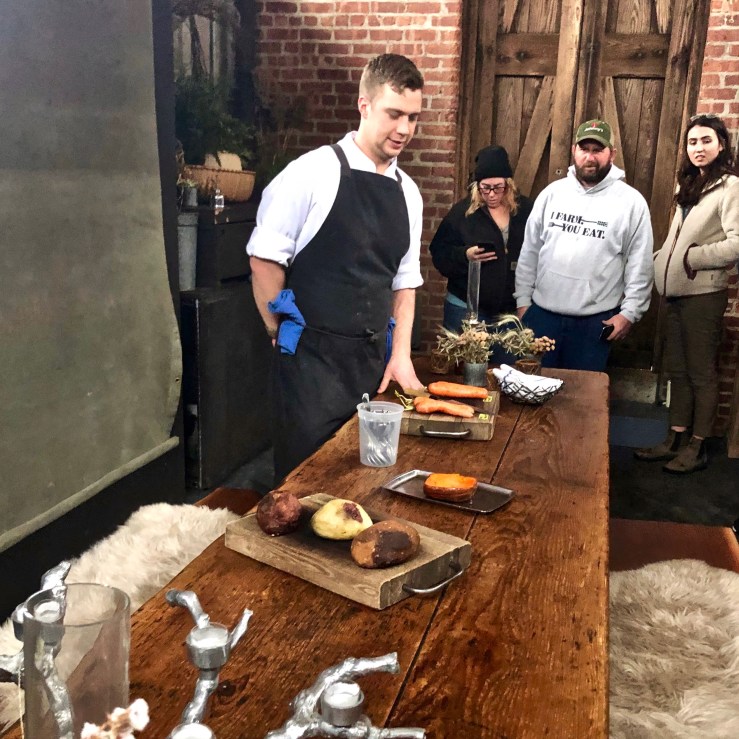
As much as I was enjoying this, parts of me were somewhat conflicted about some aspects of what was unfolding in front of me. At the end of the day, a good carrot was just that – a carrot. For me it was always something very simple that I had enjoyed and I never put much thought into it. I never thought of it as something fancy that required the infrastructure of a farm in one of the wealthiest parts of New York State and a well educated, most likely very talented young chef with a bright future, to show me the value of it. But here I was, with a mouth half open and salivating with anticipation of tasting that very fancy carrot, produced on a very fancy farm, cut with a very fancy knife, by a very fancy chef. Finally, he was done talking and chopped up the carrots. I stepped forward to get my two pieces and quickly retrieved back in my little corner from where I could see both the chef and the faces of my fellow farm goers. I wish I knew what the others were thinking about that rather unusual pomp around a carrot. I mean, in all fairness the scene was quite humorous if you were to look at it out of context.
Conflicted or not, I had my carrot and I was ready to eat it. First went the baseline carrot – it was definitely better than the carrots one finds in a store, but wasn’t mind-blowing. Then came the second carrot. I started chewing it expecting some sort of a revelation. Few bites in the revelation didn’t happen: it was good, it was juicy, it was sweet, but it wasn’t incredible. As I was overcoming my slight disappointment, I tuned back into the world around me and heard the young chef talking with continuous excitement about the other vegetables he had for us. And this is when it hit me: I wasn’t here to try the best carrot in my life. I was here because I wanted to meet people who cared enough about something as simple as a carrot, or a pumpkin or a potato.
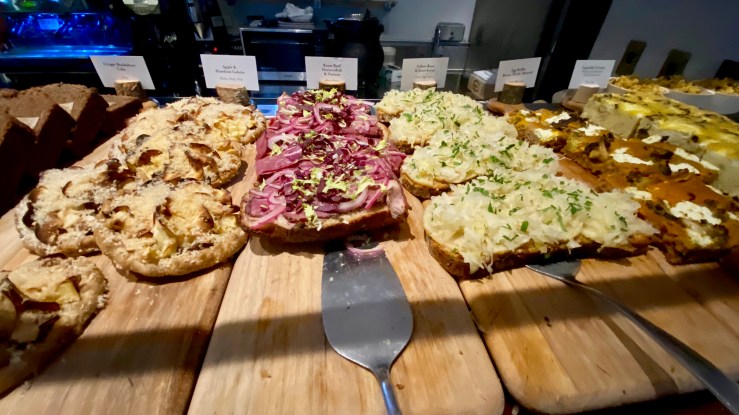
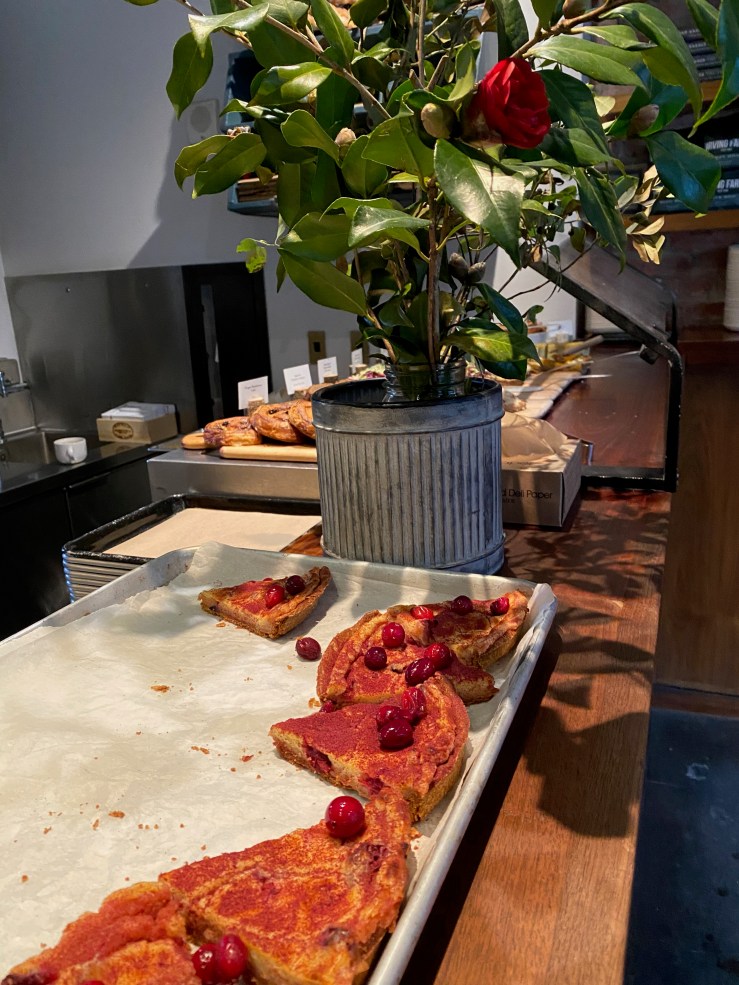
The sense of belonging I had felt on my way to the farm was coming from the knowledge of going to a place where my values would be shared. I was also excited because they were doing the type of work I’d like to be doing myself, which is help people change their views on food, learn how to recognize and appreciate the simple flavors, but also start making the connection between the sweetness of a carrot and the health of the land that has grown it. And maybe, it does take a fancy farm to get the conversation going and encourage others like myself to take the time and write about a carrot and in turn invite you, my dear reader, to give a small fraction of your precious time reading this post. I live you with pictures from the delicious lunch we had at the Grain Bar at the end of our visit. YE
NYC, March 20, 2020
References
Dan Barber, The Third Plate: Field Notes on the Future of Food. Penguin Books, 2015 https://www.thethirdplate.com/
Stone Barns Center for Food and Agriculture https://www.stonebarnscenter.org/
The World Carrot Museum (yes, there is such a thing, and yes it is British:) http://www.carrotmuseum.co.uk/
 Food In My Veins